“The goal is not to create climate-proof villages. That is impossible. The goal is to create communities that can anticipate, withstand, adapt to and recover from climate-related challenges while continuing to thrive.”
Climate change is no longer a future problem. Across East Yorkshire we are already experiencing more frequent extreme weather, heavier rainfall, hotter summers and increasing pressures on our natural environment.
For the rural villages west of Hull, including North Ferriby, Swanland, Welton, Melton, Brantingham, Elloughton, Ellerker, North Cave, South Cave and Little Weighton, climate adaptation is becoming just as important as climate mitigation.
Reducing emissions remains essential. Every tonne of carbon dioxide avoided helps limit future warming and reduce the severity of future climate impacts. But some climate change is already locked in due to past emissions. This means we must prepare for the consequences while continuing to tackle the causes.
Adaptation protects us from impacts we can no longer avoid. Mitigation prevents those impacts from becoming far worse. Neither works properly without the other.
The encouraging news is that many adaptation measures bring immediate benefits. The same actions that help communities cope with flooding, heatwaves and water stress often make our villages greener, healthier, more attractive places to live, while also supporting wildlife and strengthening community connections.
Why our villages need to prepare
The villages west of Hull share many characteristics. Most are surrounded by productive farmland, connected by small road networks, reliant on community facilities, and closely linked to the landscapes of the Humber Estuary and the Yorkshire Wolds.
These communities already experience many of the risks expected to become more common as the climate changes:
- More intense rainfall and surface-water flooding
- Higher summer temperatures and more frequent heatwaves
- Periods of drought and water stress
- Pressure on biodiversity
- Impacts on agriculture and food production
- Increased strain on infrastructure and services
While every village faces different challenges, they all share a common need to become more resilient to a changing climate.
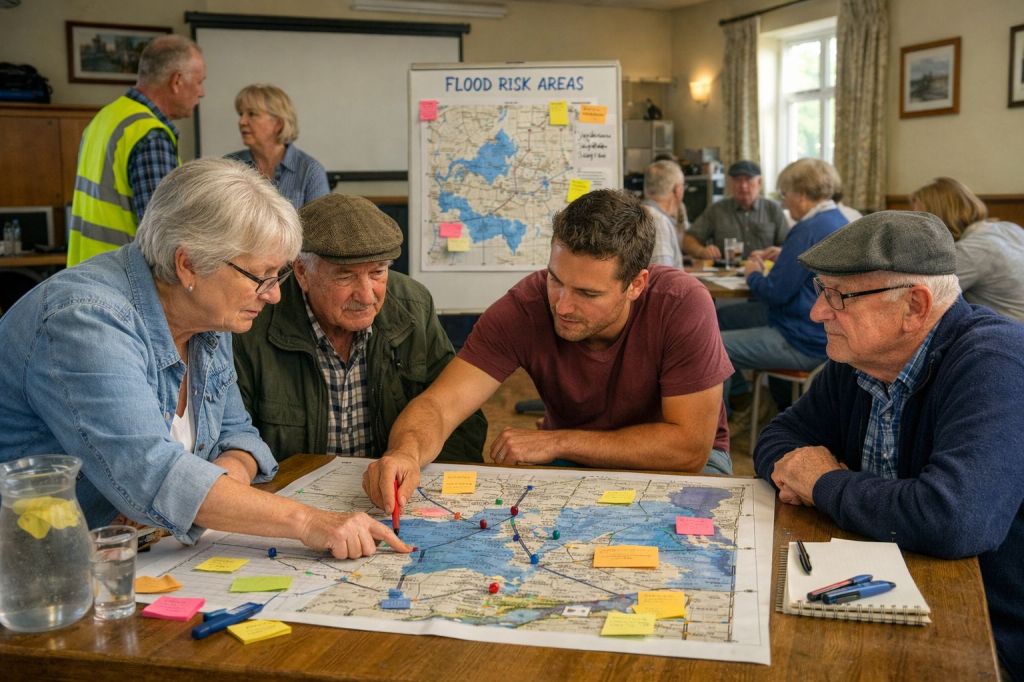
Flood Resilience
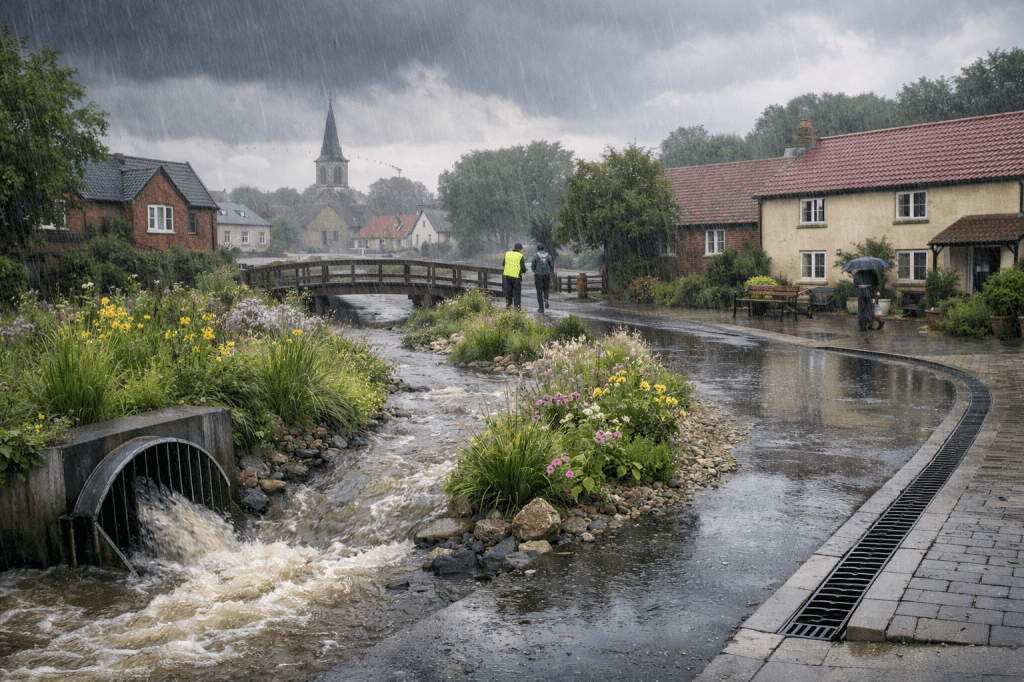
Flooding remains one of the greatest climate risks facing East Yorkshire. The devastating floods of 2007 demonstrated how vulnerable communities can be when extreme rainfall overwhelms drainage systems. Since then, substantial improvements have been made, but risk remains.
Climate change is expected to increase the frequency and intensity of heavy rainfall events, making local resilience increasingly important.
Practical community actions
- Create rain gardens to absorb and slow runoff.
- Plant trees and hedgerows that intercept rainfall.
- Restore ponds and wetlands where appropriate.
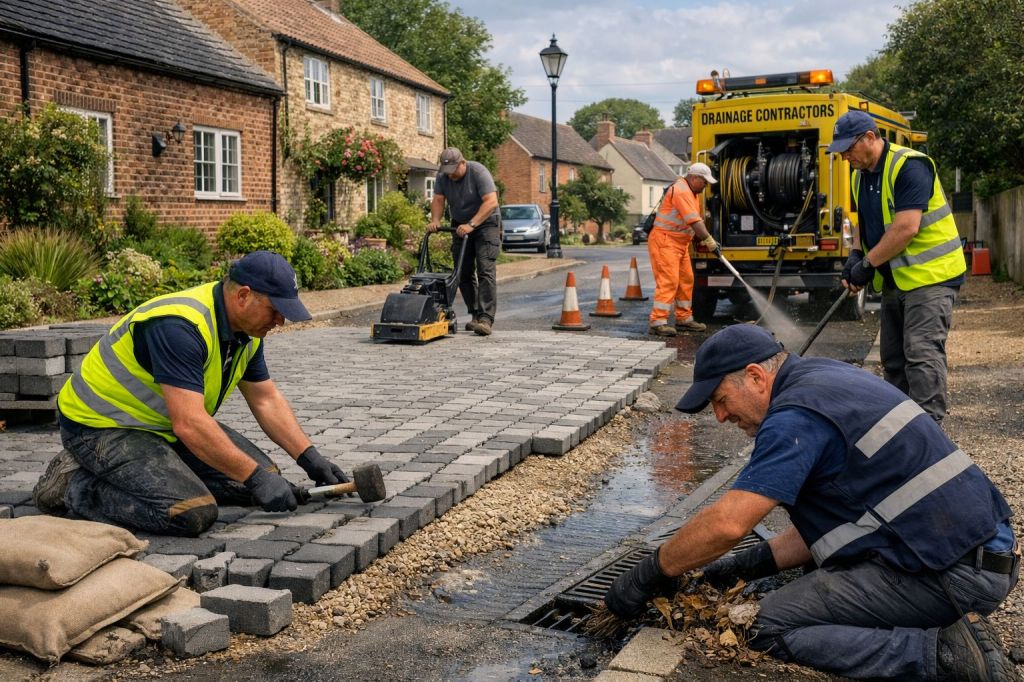
- Encourage permeable drives and pathways.
- Support local flood warden schemes.
- Develop village emergency communication networks.
Practical household actions
- Install flood-resistant airbrick covers.
- Consider non-return valves on drainage systems.
- Fit flood barriers where appropriate.
- Move electrics and valuable possessions above likely flood levels.
- Develop a household flood plan.
Greener villages are more resilient villages
Trees, wildlife habitats, ponds, hedgerows and green spaces do much more than improve appearance. They absorb water, reduce temperatures during heatwaves, support wildlife and improve wellbeing.
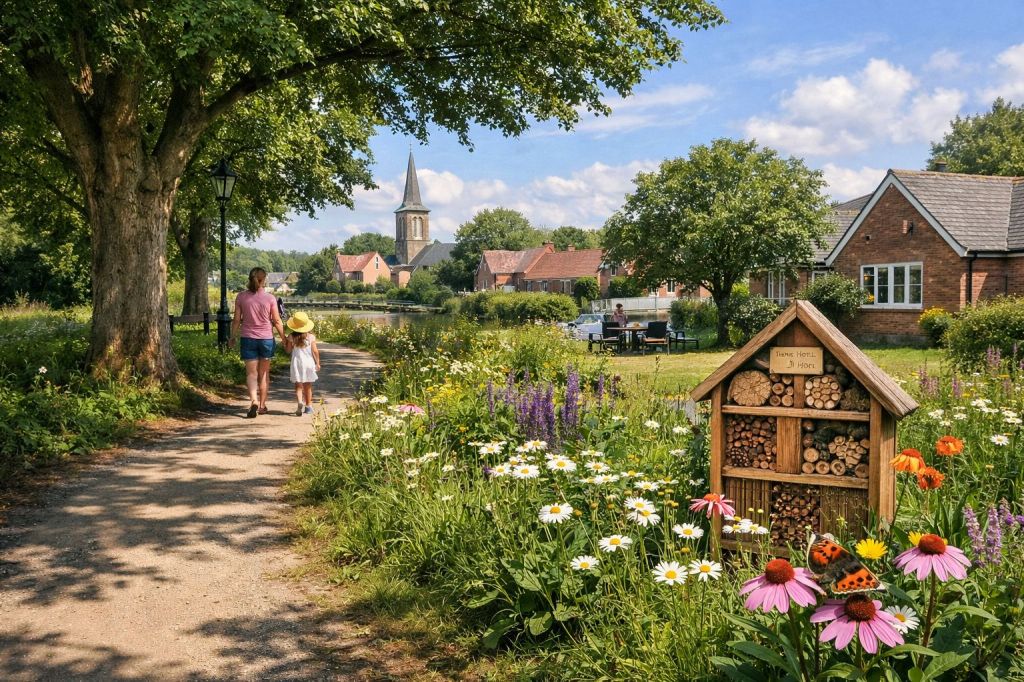
Our villages have significant opportunities to strengthen green infrastructure while enhancing biodiversity.
- Create community orchards.
- Expand native tree planting.
- Restore hedgerows.
- Develop pollinator corridors.
- Create wildlife-friendly spaces in public areas.
- Encourage nature-rich gardens.
Nature-based solutions often provide multiple benefits at the same time, reducing flood risk while making communities healthier and more attractive.
Preparing for heatwaves
Until recently, most people associated climate risk in the UK with flooding. Increasingly, however, heat presents a significant challenge.
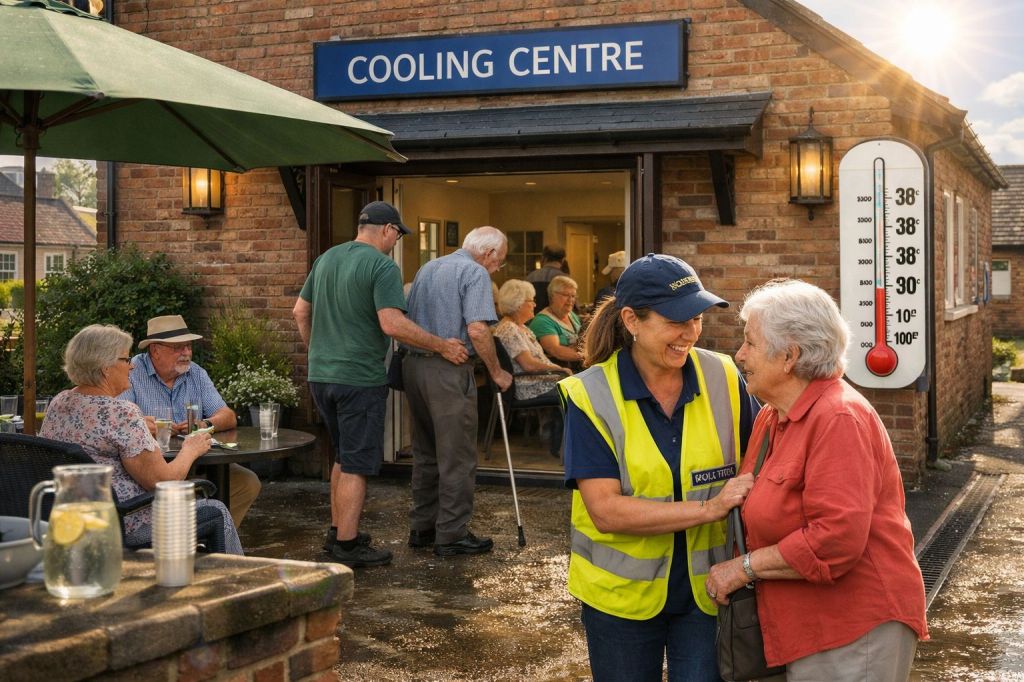
Hotter summers are already becoming more common and periods of extreme heat can affect health, comfort, infrastructure and ecosystems.
Older residents, young children and people with existing health conditions are particularly vulnerable.
Village-level measures
- Create shaded community spaces.
- Increase tree cover around public areas.
- Ensure village halls can provide cool refuges during extreme heat.
- Develop volunteer support networks for vulnerable residents.
Water security and drought resilience
Climate change is expected to bring wetter winters but potentially drier summers. Capturing and using water more effectively will therefore become increasingly important.
- Install water butts and rainwater harvesting systems.
- Use drought-tolerant planting schemes.
- Improve soil quality to retain moisture.
- Reduce water waste wherever possible.
- Support sustainable water management in community spaces.
Energy resilience
Climate resilience is not just about flooding and weather. Energy security and affordability are becoming increasingly important to households.
Many technologies that reduce emissions also increase resilience.
- Improved insulation helps homes remain comfortable during both hot and cold weather.
- Solar panels allow households to generate their own electricity.
- Battery systems provide energy storage and can help during power interruptions.
- New generations of plug-in home batteries are reducing the cost and complexity of energy storage.
- Heat pumps reduce dependence on fossil fuels while providing efficient heating.
- Smart energy systems can reduce costs and improve flexibility.
For many households, resilience increasingly means protection from both climate impacts and volatile energy prices.
Food resilience and local growing
Climate change is expected to affect food production through changing weather patterns, drought, flooding and impacts on agriculture.
While villages will never be completely self-sufficient, increasing local food production can improve resilience while creating stronger community connections.
- Support allotment associations.
- Develop community orchards.
- Encourage food-growing initiatives.
- Share gardening and food-growing skills.
- Expand composting and soil improvement programmes.
- Promote water-efficient growing techniques.
Food-growing projects deliver environmental, educational and wellbeing benefits while helping communities understand the challenges climate change may bring to future food systems.
Building resilience together: what communities can do
Climate adaptation is often discussed as though it is something governments deliver. In reality, the strongest resilience is built locally.
The villages already possess many of the assets needed to adapt successfully. We have active parish councils, schools, allotment associations, sports clubs, churches, village halls, volunteer groups, local businesses, wildlife organisations and community initiatives.
Research consistently shows that communities with strong social networks are more resilient to floods, heatwaves and other emergencies than communities where people are isolated from one another.
Climate adaptation is therefore as much about people as it is about infrastructure.
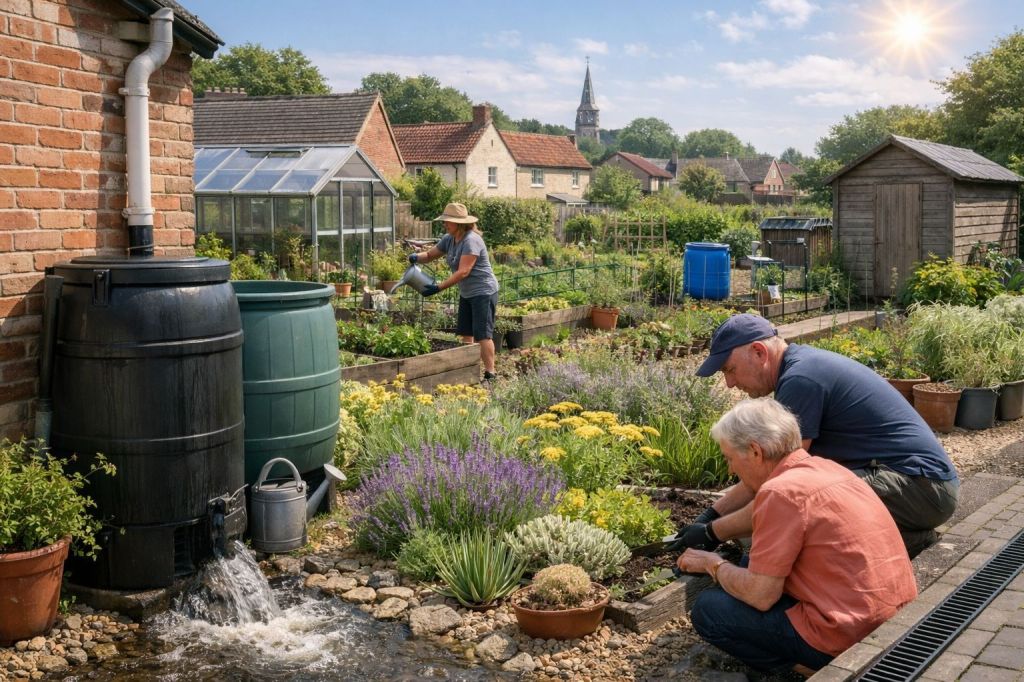
Allotment associations
- Install communal rainwater harvesting systems.
- Promote drought-resilient growing techniques.
- Improve soil health and water retention.
- Share practical food-growing skills.
Men in Sheds and community workshops
- Build raised planters and composting systems.
- Create bird and bat boxes.
- Support biodiversity and flood resilience projects.
- Contribute practical skills to local community initiatives.
Sports clubs
- Improve drainage and shade.
- Plant trees and create habitat areas.
- Support community resilience during extreme weather.
Schools and youth organisations
- Develop outdoor learning spaces.
- Lead tree planting projects.
- Create wildlife-friendly habitats.
- Support citizen science activities.
The role of Parish Councils
Proactive parish councils are uniquely placed to help communities prepare for climate risks.
- Promote climate resilience in village planning.
- Support local biodiversity initiatives.
- Encourage sustainable drainage approaches.
- Improve public spaces.
- Support community resilience planning.
- Bring together local organisations and volunteers.
Their most important role may be helping communities work together around shared goals.
Strong communities are resilient communities
Perhaps the most effective adaptation measure costs very little.
Communities where neighbours know and support one another recover more quickly from floods, heatwaves and other disruptions.
- Neighbour support networks.
- Volunteer flood wardens.
- Village resilience groups.
- Emergency communication networks.
- Skills-sharing initiatives.
These strengthen everyday community life while also improving preparedness for future challenges.
Conclusion
Climate adaptation is sometimes framed as preparing for problems. In reality, it is an opportunity to create better places to live.
The actions that help communities adapt often bring immediate benefits. Tree planting improves biodiversity and provides shade. Rain gardens reduce flooding and beautify public spaces. Community orchards bring people together while supporting local food production. Better-insulated homes are more comfortable and cheaper to run. Strong social connections reduce isolation while improving resilience.
Our villages already possess many of the qualities needed to thrive in a changing climate: strong community spirit, active local organisations, committed volunteers and engaged parish councils.
The challenge is not simply to protect what we have today. It is to build communities that are ready for tomorrow.
Climate change will continue to reshape our environment throughout this century. The villages that prosper will not necessarily be those with the largest budgets or the most sophisticated technology. They will be the communities that work together, support one another, and take practical action before problems become crises.
By reducing emissions, strengthening resilience and harnessing the power of local communities, the villages can demonstrate how rural communities can adapt successfully to a changing climate while remaining vibrant, attractive and welcoming places to live.