The UK’s solar sector has entered a new phase of rapid expansion, with March 2026 marking the strongest month for new installations in more than a decade. Government data shows that 27,607 solar systems were added nationwide during the month, pushing the country beyond the milestone of two million total installations and lifting national household capacity to 22.1 GW.
What makes this surge especially notable is the role of ordinary households. Around two‑thirds of March’s installations were domestic rooftop systems, contributing roughly 85 MW of new capacity.
Home PV installations in March contribute about 85 MW of new electricity generation capacity.
The figures highlight how strongly homeowners are responding to energy price volatility and the desire for greater independence from the grid.
Policy Measures Fueling the Boom
Several recent policy decisions have helped accelerate adoption.
The VAT waiver has reduced already low wholesale prices of panels to unprecedented levels. It’s possible to buy a high performance PV panel for as little as £50 wholesale.
The middle eastern conflict has made households re-evaluate their priorities in the face of significant price rises this summer.
The government’s introduction of plug‑in solar panels – typically priced between £400 and £500 – will further open the market to renters and people living in flats who previously had no practical route to generate their own electricity.
Looking ahead, the Future Homes Standard will require all new homes in England to include solar panels from 2028, effectively making rooftop generation a default feature of new‑build housing. Large‑scale projects are also contributing to national growth, including the 373 MW Cleve Hill solar farm, which entered operation in 2025 and remains one of the most significant additions to the UK’s renewable infrastructure.
Energy Security and Household Resilience
As mentioned, the latest deployment figures arrive against the backdrop of rising global energy prices linked to the conflict in Iran. Energy Secretary Ed Miliband has framed the surge in installations as part of the UK’s broader “clean energy mission”, emphasising that distributed solar generation helps households “weather global energy shocks” and reduce exposure to fossil‑fuel‑driven price swings.
Analysts note that this shift is not only environmental but also practical: rooftop solar offers a buffer against supply disruptions and gives families more control over their long‑term energy costs. It’s widely regarded as one of the best investments you can make, far outperforming ISAs and even pensions.
What’s Next for UK Solar
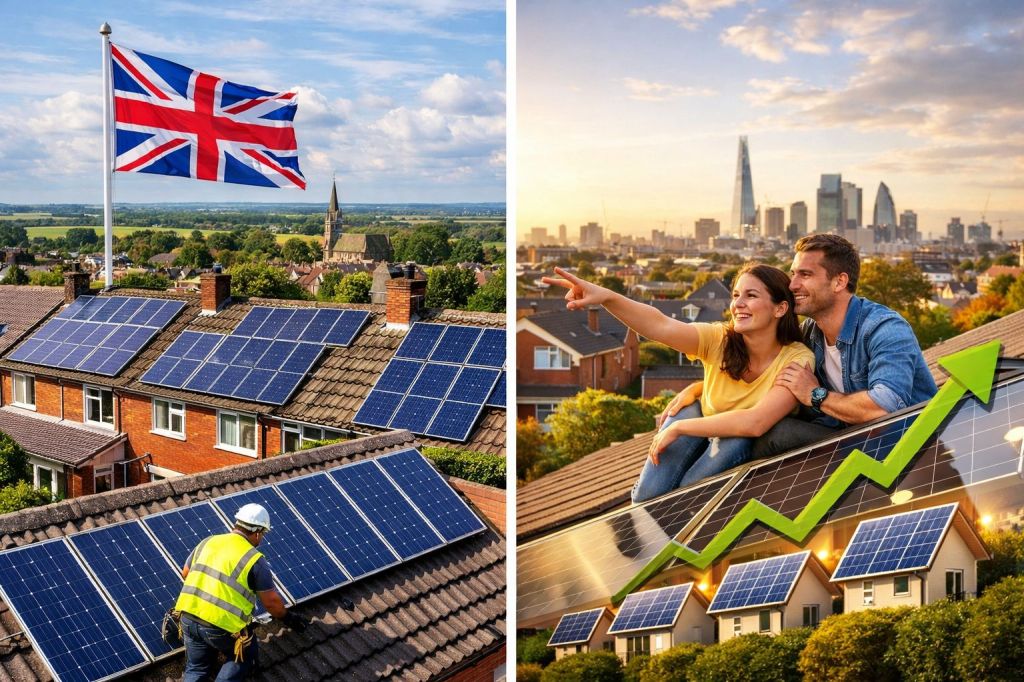
The momentum has continued into spring. Through Great British Energy, the government has already funded rooftop solar for 100 schools and colleges, signalling a push toward wider public‑sector adoption. Meanwhile, April 2026 delivered another milestone when solar generation on Britain’s electricity system exceeded 15 GW for the first time.
With consumer demand rising, new technologies entering the market, and supportive policy frameworks taking shape, the UK’s solar industry appears set for sustained growth. The combination of household participation, large‑scale infrastructure, and government backing is positioning solar power as a central pillar of the nation’s clean‑energy transition.

