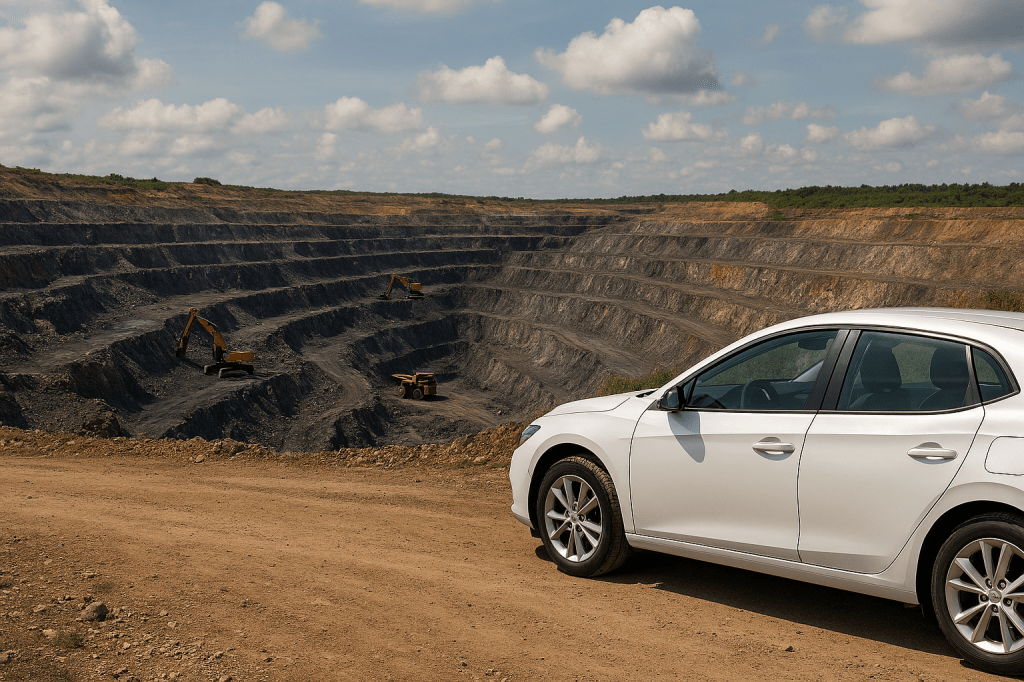
Like almost every other physical thing we use, the raw materials come from somewhere. Humans mine gigatonnes of materials from our planet every year, often with significant environmental impacts. In some cases there is a human cost too.
In their fight against the inevitable transition to renewable energy there are those who criticise renewables for also relying on mined materials. It’s a crass argument, but tricks, confuses or convinces enough people to be a problem.
A particular favourite regarding large scale batteries, as used in EVs, home and grid-scale electricity storage, is for the bots and BigOil devotees to cite the sometimes dreadful conditions of those involved in cobalt mining. This article clarifies the realities today.
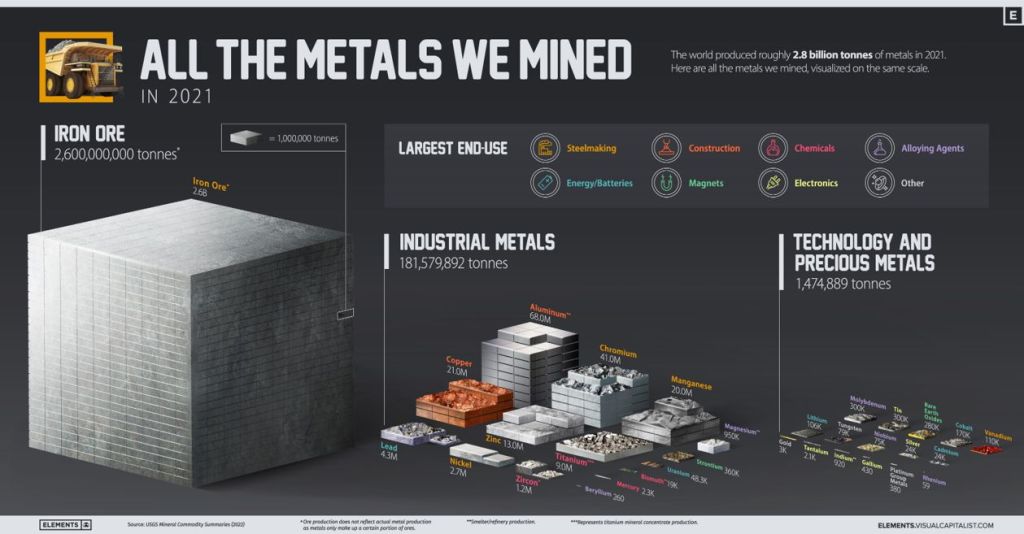
Mining has real impacts, but the quantitative picture is very different from the way it’s often portrayed. A few data points help put it in context:
Fossil fuels require continuous extraction.
Every year the world extracts around 15 billion tonnes of coal, oil and gas. All of it is burned once, then we extract more the next year.
• Batteries require a one‑time materials investment.
A typical EV battery contains roughly 60–80 kg of critical minerals (lithium, nickel, cobalt, manganese). Over a 15‑year life, that replaces 30–40 tonnes of petrol or diesel that would otherwise be burned.
The total mass of minerals needed for the clean‑energy transition is tiny compared with fossil fuels.
The IEA estimates that even in a fully electrified world, total mineral extraction for batteries and renewables would be <1% of the mass of fossil fuels we currently dig up and burn each year.
Cobalt is the biggest ethical concern — and it’s already being engineered out.
In 2016, EV batteries were ~25% cobalt by weight. New chemistries. That was a decade ago. Modern battery chemistries like LFP and LMFP use zero cobalt, and high‑nickel chemistries have reduced cobalt content dramatically since 2016. The IEA confirms that mineral intensity varies widely and is rapidly improving.
Sodium batteries
As of this year sodium-ion batteries are appearing. Sodium‑ion batteries dramatically reduce the need for scarce minerals, because they replace lithium, cobalt and nickel with materials that are abundant, cheap, and widely distributed.
- Sodium is 1,000× more abundant than lithium in the Earth’s crust
- USGS data shows sodium at ~23,600 ppm vs lithium at ~20 ppm.
- No cobalt, no nickel, no lithium
- Sodium‑ion chemistries (e.g., Prussian Blue, hard‑carbon anodes) eliminate the three minerals with the highest ethical and environmental concerns.
- Mineral demand per kWh is far lower.
Because sodium‑ion uses common materials (sodium salts, iron, manganese), the IEA notes that sodium‑ion has “significantly lower critical‑mineral intensity” than lithium‑ion.
Manufacturing emissions are lower. CATL and Faradion (UK) report that sodium‑ion cells can be produced using existing LFP lines with lower energy input, reducing upstream emissions.
Performance is now good enough for mass‑market vehicles.
CATL’s second‑generation sodium‑ion cells reach 160 Wh/kg, comparable to early LFP batteries, and are already entering production for small EVs and stationary storage.
They are also perfect for grid storage, where most batteries will be used
BloombergNEF and IEA both project that stationary storage will exceed EV battery demand by the 2030s, and sodium‑ion is ideal for this because it’s cheap, safe, and uses no constrained minerals.
Because sodium‑ion can replace lithium‑ion in:
– grid batteries
– low‑range EVs
– scooters, bikes, tuk‑tuks
– home storage
…it directly reduces demand for lithium, nickel and cobalt, easing the mining burden in the regions where impacts are highest.
Recycling is simpler; Sodium‑ion cells contain no high‑value critical minerals, so recycling focuses on low‑energy recovery of iron, manganese and carbon, with far fewer toxic by‑products.
Recycling flips the equation long‑term.
Battery materials are 95%+ recyclable, and the metals retain full value. Fossil fuels can never be recycled; once burned, they’re gone. By 2040, recycled material could supply 40–50% of battery minerals.
Life‑cycle emissions aren’t even close.
Even accounting for mining and manufacturing, an EV typically emits 60–70% less CO₂ over its lifetime than a petrol car. The break‑even point is usually 1–2 years of driving.
So yes, mining impacts matte, but the numbers show that batteries reduce total extraction, reduce long‑term harm, and move us toward a system where materials circulate instead of being burned forever.
—
References
1. Mineral demand vs fossil‑fuel extraction
International Energy Agency (IEA), The Role of Critical Minerals in Clean Energy Transitions (2021 & 2023 updates).
Shows that fossil fuels are extracted in billions of tonnes per year, while clean‑energy minerals are in millions, and even a fully electrified system requires <1% of today’s fossil‑fuel mass flow.
https://www.iea.org/reports/the-role-of-critical-minerals-in-clean-energy-transitions
2. EV battery mineral content
US Department of Energy — Argonne National Laboratory, BatPaC Model and material composition tables.
Typical EV battery contains 60–80 kg of critical minerals (Li, Ni, Co, Mn).
https://www.anl.gov/cse/batpac-model-software
3. Fuel displaced by EVs
UK Department for Transport & BEIS conversion factors; typical ICE car burns 30–40 tonnes of fuel over 150,000–200,000 miles.
https://www.gov.uk/government/collections/government-conversion-factors-for-company-reporting
4. Land‑use impact of battery‑mineral mining
Imperial College London, Mining the Future: Assessing the Environmental Footprint of Critical Minerals for the Energy Transition (2023).
Lithium mining land footprint ~460 km² to 2030; biodiversity‑weighted footprint for all battery minerals ~4,296 km².
https://www.imperial.ac.uk/news/248587/mining-critical-minerals-energy-transition-could/
5. Decline of cobalt in batteries
IEA, Global EV Outlook 2023.
Shows cobalt content in EV batteries falling sharply due to LFP, LMFP and high‑nickel chemistries; many chemistries now zero‑cobalt.
https://www.iea.org/reports/global-ev-outlook-2023
6. Battery recycling potential
IEA, Global Critical Minerals Outlook 2023.
Recycling could supply 40–50% of battery minerals by 2040.
https://www.iea.org/reports/global-critical-minerals-outlook-2023
7. EV life‑cycle emissions
European Commission Joint Research Centre (JRC), Life Cycle Assessment of Electric Vehicles (2020).
EVs emit 60–70% less CO₂ over their lifetime than ICE vehicles, even including mining and manufacturing.
https://publications.jrc.ec.europa.eu/repository/handle/JRC118451
8. Ethical issues in cobalt mining
Amnesty International & OECD Due Diligence Guidance; widely cited in IEA reports.
Confirms issues in artisanal cobalt mining and the shift toward chemistries that eliminate cobalt.
https://www.amnesty.org/en/latest/news/2016/01/this-is-what-we-die-for/

