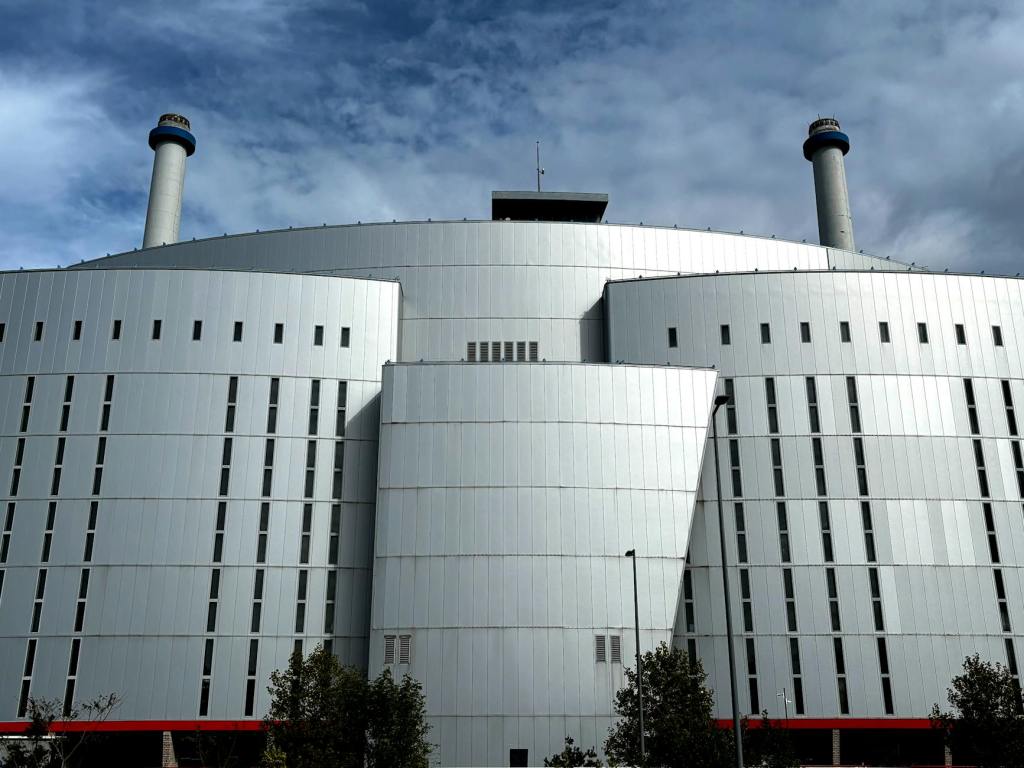
United Downs’ 3 MW plant discussed in our previous article is often described as “powering 10,000 homes.” That invites a natural question:
Would it be better to spend the same money putting solar on those 10,000 homes (plus storage) instead of building a geothermal plant?
This is a useful thought experiment, but only if we’re honest about:
- What each option actually delivers
- How costs scale in the real world
- The difference between annual energy and reliable energy
Option A: Geothermal plant for 10,000 homes
Let’s consider the United Downs project:
- 3 MW continuous output
- ~25–26 GWh/year at ~95% capacity factor
- Equivalent to ~10,000 homes’ annual electricity use
- Consistent output, regardless of whether it’s December at 3 a.m. or June at noon
It provides firm capacity (can be counted on in winter peaks), requires no energy storage to be usefully available and uses a single grid connection at high utilisation.
Cost and co‑products
First-of-a-Kind (FOAK) cost is high, but later plants should be cheaper per MW. United Downs also co‑produces lithium carbonate, which adds revenue and strategic value.
Option B: solar on 10,000 homes
To get realistic system sizing and cost we will assume:
- 4 kWp per home (typical UK rooftop system)
- Installed cost around £1,000/kWp at scale → £4,000 per home
- Investment required for 10,000 homes → £40 m total
This scale of investment providers an annual generation per home in the UK of roughly 3,000–3,800 kWh/year depending on location
- For 10,000 homes → 30–38 GWh/year
So rooftop solar on 10,000 homes can exceed the annual output of the geothermal plant, at a similar or slightly lower capital cost.
The gotcha: seasonality and timing
Solar output is highly seasonal, with winter output typically 10–20% of summer.
It’s obviously also daytime only and often mismatched with peak demand (especially winter evenings)
So while the annual kWh look great, the winter evening generation, when the grid is stressed and the need is high, it’s limiting.
Option C: solar + storage for 10,000 homes
To overcome the mismatch between time of generation and demand we should add battery storage. If we assume:
- 10 kWh battery per home
- Cost around £2,500 at scale
- For 10,000 homes → £25 m
Combined with solar the total capital rises to ~£65 m (solar + batteries).
For this investment, households gain resilience and bill savings and the local grid sees reduced daytime demand and some evening support.
But… Batteries can only shift energy within about a day, not across seasons. They cannot turn December’s 2–4 kWh/day into June’s 20–25 kWh/day.
Grid‑scale storage instead?
Grid‑scale batteries are cheaper per kWh than domestic ones, but they still typically can only provide 2–8 hours of storage. They are optimised for short‑term balancing and price arbitrage, so do not solve multi‑week winter deficits.
Even with cheap storage, solar remains non‑firm at the seasonal scale.
Why a hybrid beats either extreme
Let’s compromise
Geothermal alone
Pros:
- Firm, 24/7, winter‑strong output
- No storage required
- High system value per kWh
Cons:
- Limited to specific geologies
- Higher cost per MW than solar
- Single‑point asset (if it trips, 3 MW disappears)
Solar + storage alone
Pros:
- Cheap per annual kWh
- Distributed, resilient
- Fast to deploy
Cons:
- Weak in winter
- Needs overbuild + storage + grid upgrades
- Still relies on some firm capacity (gas, nuclear, hydro, or geothermal)
The hybrid: geothermal + solar + storage
A balanced system for those same 10,000 homes might look like:
- One 3–5 MW geothermal plant providing a firm floor of power, especially in winter.
- Rooftop solar on as many homes as feasible, reducing annual grid demand and providing cheap summer energy.
- Storage (mix of domestic and grid‑scale) to smooth solar and capture price spreads.
Operationally:
- Geothermal runs as the steady backbone, possibly modulated slightly to follow broader demand patterns.
- Solar provides cheap daytime energy, especially in summer.
- Batteries handle fast ramps and intra‑day shifting, so geothermal doesn’t need to chase every cloud.
This hybrid minimises reliance on gas‑fired peakers, reduces curtailment of solar, keeps system costs lower than “solar + massive storage” alone and delivers both cheap annual energy and reliable winter energy
The bottom line
If you only look at annual kWh per pound, solar (especially at realistic £/kWp) looks better than geothermal.
However, if you care about winter reliability and firm capacity, geothermal looks far better. While batteries improve solar’s usefulness they do not fix its seasonal weakness.
The rational path is a hybrid: geothermal for firm capacity, solar for cheap energy, storage as the glue between them.
The question isn’t “geothermal or solar?”, it’s “how much of each gives the best mix of cost, reliability, and decarbonisation?”
The nuclear option
In some ways, geothermal and nuclear are similar:
- Firm, low‑carbon electricity
- High capacity factors
- Weather‑independent output
However, they differ radically in:
- Scale per site
- Geographic constraints
- Capital intensity
- Deployment speed and risk profile
One again, the right question is not “which one wins?” but “how do they complement each other in a UK decarbonisation strategy?”. Let’s explore this.
Cost per MW: small, modular vs huge, centralised
Geothermal cost per MW:
- FOAK deep‑geothermal (like United Downs) likely sits around £15–20 m/MW once all costs are counted.
- With a fleet and learning, this could fall to £8–12 m/MW.
Unit size:
- 3–10 MW per plant, depending on resource and design.
So a 5 MW plant might cost £40–60 m in a mature programme.
Nuclear cost per MW
Recent UK nuclear projects (e.g. Hinkley Point C) have:
- Total costs in the tens of billions of pounds for ~3.2 GW (two units).
- Implied costs often in the £6–10 m/MW range or higher once financing and overruns are included.
Unit size:
- 1,000–1,600 MW per reactor.
So per MW, nuclear can be comparable or somewhat cheaper than mature geothermal.
But:
- It comes in huge, indivisible chunks.
- It carries massive project risk (delays, overruns, political shifts).
Geothermal is more expensive per MW than the theoretical nuclear target, but often more competitive against real‑world nuclear costs once risk and financing are accounted for.
Contribution to UK generation capacity
Nuclear
A single large nuclear plant provides around 3 GW of firm capacity, offering 7–25 TWh/year depending on size and capacity factor. A handful of such plants can cover a large share of national baseload, providing a strong anchor for a high‑renewables system. The concern is that each project is a mega‑bet with long lead times (10–15+ years). A bet where felays or cancellations have national‑scale consequences.
Geothermal: regional firming and resilience
A realistic UK deep‑geothermal programme might deliver 100–300 MW of firm capacity across multiple sites, offering 0.8–2.5 TWh/year.
This is modest compared with nuclear, but it’s regionally distributed (e.g. Cornwall, Weardale, parts of Scotland).
It strengthens local grids and reduces reliance on long‑distance transmission and can be built in parallel, with learning and iteration.
Agility of deployment
Nuclear: slow, lumpy, high‑stakes
Characteristics:
- Long development cycles (planning, licensing, construction).
- High political and financial exposure.
- Complex supply chains and regulatory regimes.
Upside:
- Once built, a plant runs for 60+ years with high output.
Downside:
- You get nothing until the plant is finished.
- If one project fails, gigawatts of planned capacity vanish.
Geothermal: incremental, iterative, lower‑stakes
Characteristics:
- 3–5 year timelines per site once permitting is streamlined.
- Many small projects instead of one mega‑project.
- Ability to learn from early wells and improve later ones.
Upside:
- You can start delivering firm power after the first few plants, not after a decade.
- If one site underperforms, it’s a local issue, not a national crisis.
Downside:
- Total national capacity is limited by geology.
- You need a portfolio of sites to reach meaningful scale.
Tactical and strategic advantages
Geothermal
- Fast regional deployment: Ideal for strengthening weak grid regions (e.g. Cornwall) where wind/solar are strong but firm capacity is lacking.
- Co‑production of lithium: Supports EV and storage supply chains with domestic, low‑carbon lithium.
- Modularity: Easy to scale up or down; multiple small plants reduce single‑point failure risk.
- Public acceptance: Smaller footprint, no large cooling towers, no nuclear waste issues.
- Diversification of firm low‑carbon sources beyond nuclear and gas.
- Regional economic development (drilling, engineering, operations).
- Synergy with heat networks and industrial heat where feasible.
Nuclear
- Huge blocks of firm capacity in one place.
- High energy density and tiny land footprint per kWh.
- Predictable, long‑term output once built.
- National‑scale decarbonisation of baseload.
- Reduced dependence on gas for winter peaks.
- Long asset life (60+ years) with stable output.
Given nuclear’s political and financial limits (only a few sites will ever be built) the rational UK strategy is to maximise economically viable geothermal in regions where the resource is strong (Cornwall, etc.), while building a limited number of nuclear plants to provide national‑scale firm capacity. In parallel we should layer in massive wind and solar, using geothermal and nuclear as the firm backbone, as well as use storage and demand response to smooth the remaining variability.
In this scenario geothermal is not a rival to nuclear; it’s a complement that reduces pressure on nuclear to be the only firm low‑carbon option.
The bottom line
Mature geothermal and real‑world nuclear are in a similar ballpark, but geothermal is modular and nuclear is mega‑scale. Nuclear can deliver tens of GW; geothermal likely hundreds of MW, but in strategically important locations.
Geothermal is faster and more incremental; nuclear is slower but massive.
A UK grid with wind + solar + nuclear + geothermal is more resilient, less gas‑dependent, and less exposed to any single technology’s risks than one that relies on just one or two pillars.
A good way to think about all this is
“Geothermal wherever we can, nuclear wherever we must, and wind/solar everywhere it makes sense.”
 Sustainable Ferriby
One response to “Geothermal, not household solar”
thoroughly researched and reasoned, very compelling scenario. You should be speaking to Ed Milliband!
LikeLiked by 1 person