Current Scientific Evidence and Consensus
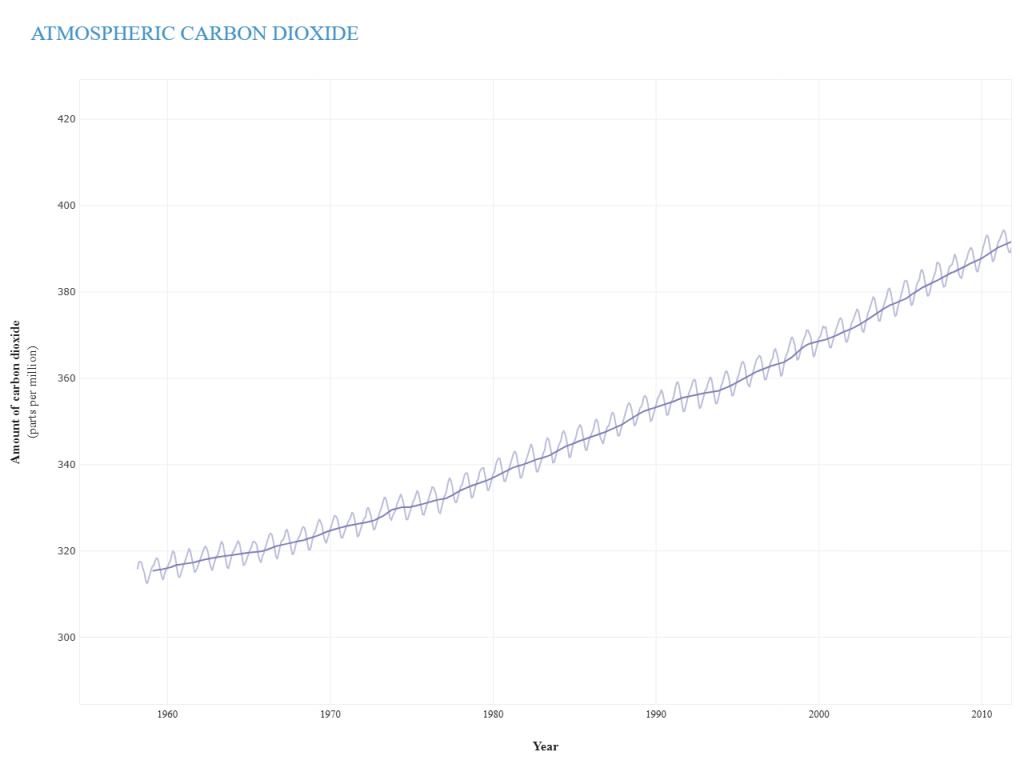
Summary: The scientific evidence overwhelmingly shows that rising carbon dioxide (CO₂) levels from human activities are causing Earth’s climate to warm. Atmospheric CO₂ has increased about 50% since pre-industrial times, from ~280 ppm to over 420 ppm today – a level not seen in millions of years. This increase in CO₂ is trapping additional heat in the climate system, leading to approximately 1°C of global warming since the late 19th century. Multiple independent lines of evidence – from fundamental physics experiments to direct observations of the atmosphere – confirm a causal relationship: adding CO₂ to the air leads to warming of the planet. As a result, virtually all climatologists and relevant scientific institutions agree that human-emitted CO₂ is the primary driver of recent climate change. Leading scientific assessments (e.g. the IPCC) describe this link as an “established fact” supported by extensive research. Below is a structured summary of the key evidence, followed by responses to common objections raised by climate change skeptics.
CO₂ as a Greenhouse Gas and Its Role in Warming
Greenhouse Effect Basics: Carbon dioxide is a greenhouse gas (GHG), meaning it absorbs heat (infrared radiation) emitted from Earth’s surface and re-radiates it back down, warming the lower atmosphere. Without greenhouse gases (mainly water vapor, CO₂, methane, etc.), Earth’s surface would be a frozen ~33°C colder on average. CO₂ may be a trace constituent (~0.04% of air), but it has a powerful heat-trapping effect. In fact, CO₂ is the most important long-lived GHG in Earth’s climate system.
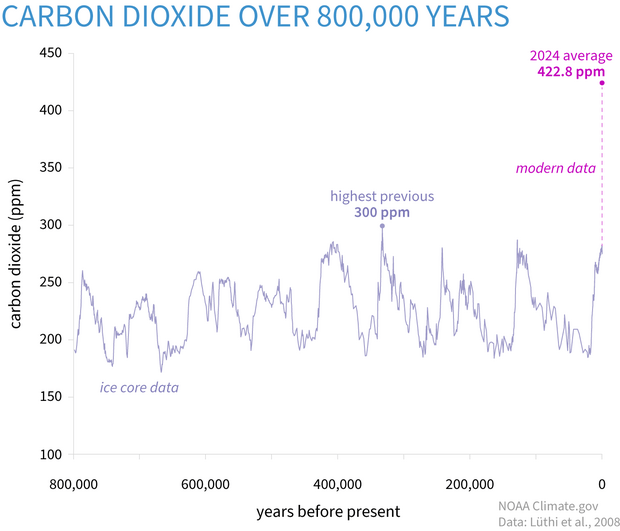
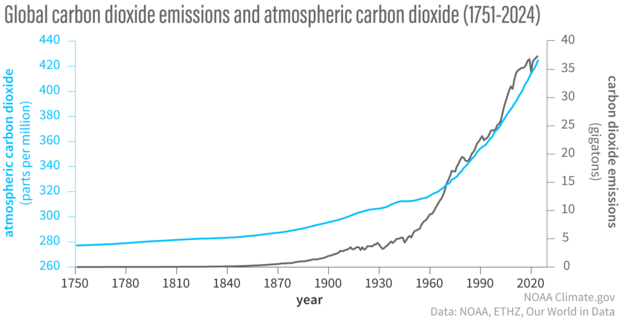
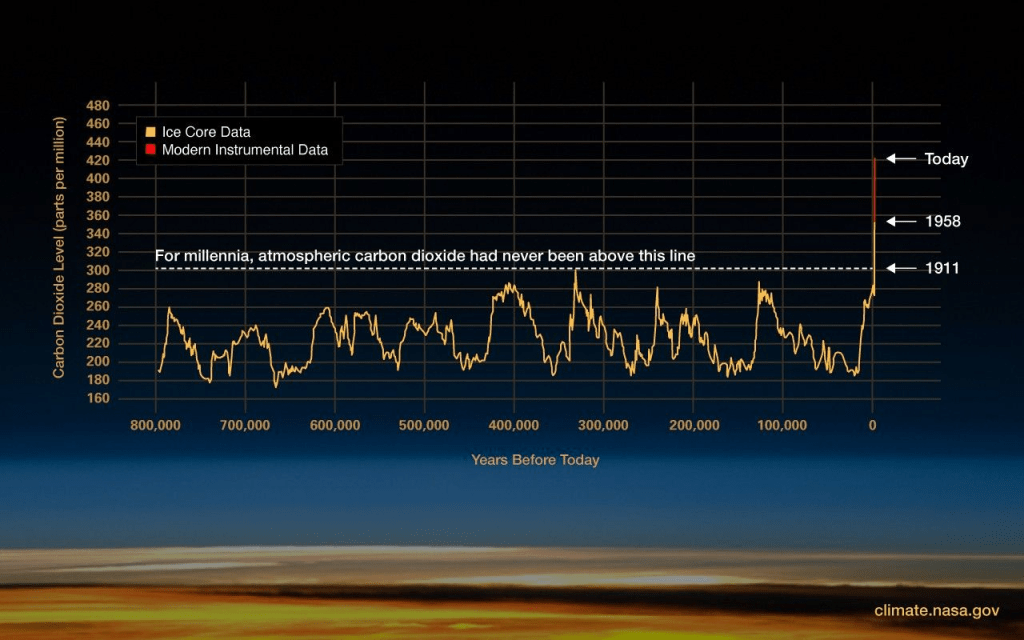
Modern CO₂ Rise: Human activities (primarily burning fossil fuels and deforestation) now emit far more CO₂ than natural processes can remove, causing CO₂ to accumulate in the atmosphere. CO₂ levels have climbed sharply in the past 150 years – faster than any natural increase in at least 800,000 years. The global average concentration exceeded 422 ppm in 20241, about 150% of the pre-industrial level. This anthropogenic CO₂ increase is enormous and unprecedented on geological timescales; for example, the last time CO₂ exceeded 400 ppm (around 3 million years ago), global temperatures were 2–4°C hotter and sea levels much higher. This illustrates how strongly CO₂ is linked to a warmer climate.
Physics and Direct Measurements: The heat-trapping properties of CO₂ are well-demonstrated in both laboratory experiments and atmospheric observations. Scientists have understood since the 19th century that CO₂ absorbs outgoing infrared radiation. Modern satellite instruments (like NASA’s AIRS spectrometer) and ground measurements directly observe CO₂ trapping heat in the atmosphere. Notably, a landmark 2015 study made the first direct detection of CO₂’s increasing greenhouse effect at Earth’s surface: over a decade, a 22 ppm rise in CO₂ caused an additional 0.2 W/m² of thermal infrared energy down at the surface, matching theoretical predictions. This kind of measurement is essentially a “smoking gun” linking rising CO₂ to extra heat, confirming cause and effect in real time.
Radiative Forcing: As CO₂ accumulates, it increases the atmosphere’s radiative forcing (net heat imbalance). From 1750 to today, CO₂ alone contributes roughly 2 Watts per square meter of added heat input to Earth – making it the largest single driver of the ongoing warming. In fact, NOAA data indicate CO₂ is responsible for about 80% of the total warming influence of all human-emitted greenhouse gases since 1990. In short, adding more CO₂ intensifies the greenhouse effect and warms the planet, which is exactly what has been observed. NASA succinctly states: “Since carbon dioxide is a greenhouse gas, this increase has warmed the planet.”

Evidence of CO₂-Driven Climate Change
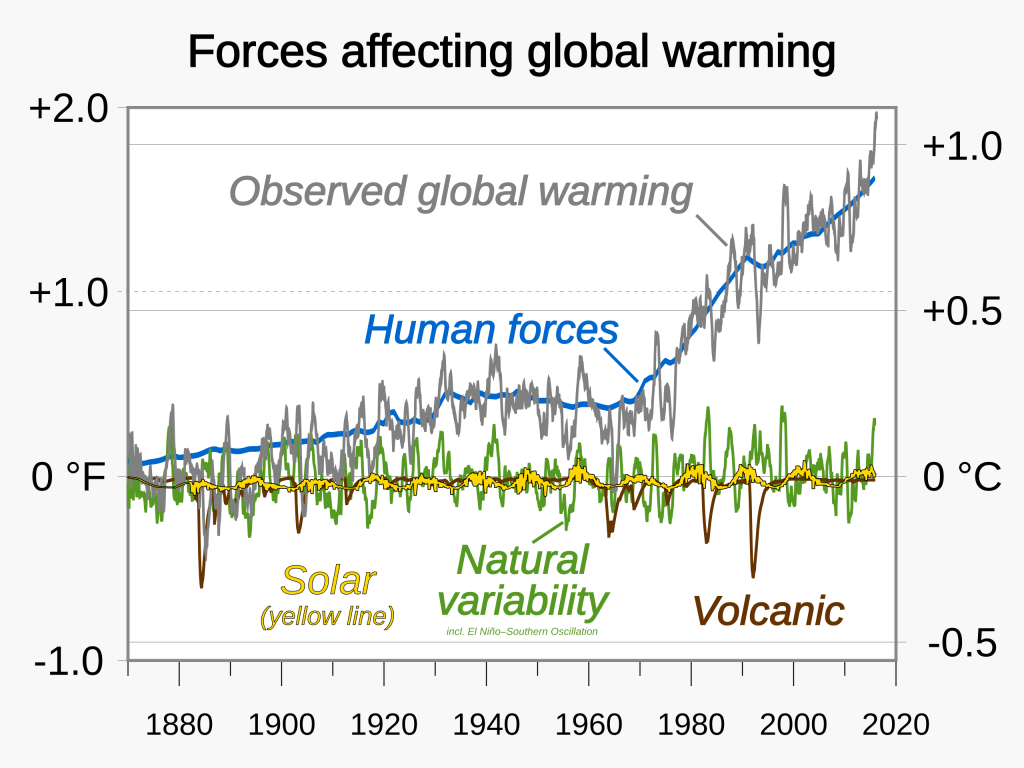
Warming Trend and Attribution: Global surface temperatures have risen significantly and in step with rising CO₂. Earth’s average surface temperature is now about 1.0–1.2°C higher than it was in the late 1800s, with the past decade being the warmest on record. Climate scientists can attribute this warming to CO₂ and other greenhouse gases by using physics-based models and statistical analyses. When human GHG emissions are included, models reproduce the observed warming; when only natural factors (like solar and volcanic activity) are considered, models cannot explain the rapid warming of the late 20th and 21st centuries. In the real world, observations likewise show no natural factor that could account for the magnitude and pattern of warming we see. For instance, the sun has not shown an increasing trend over the past 50+ years, and internal climate cycles (like El Niño/La Niña) only redistribute heat short-term – they don’t produce sustained global trends. The warming correlates strongly with the rapid CO₂ rise, but more importantly, the spatial and vertical pattern of climate change bears the distinct fingerprint of GHG warming rather than solar or natural warming.
“Fingerprints” in the Atmosphere: One striking piece of evidence is how temperatures are changing at different altitudes. GHG-induced warming leads to a warmer lower atmosphere (troposphere) but a cooler upper atmosphere (stratosphere) – because more heat is trapped below, less escapes to heat the stratosphere. In contrast, if the sun were causing the warming, we would expect warming throughout the atmosphere (including the stratosphere). What we observe is exactly the GHG pattern: the troposphere has warmed while the higher stratosphere has cooled. A recent study extended these analyses to the mid and upper stratosphere and found an unmistakable human “fingerprint” of pronounced cooling aloft due to CO₂ increases, beyond what natural variability could produce. The lead author noted: “It is now virtually impossible for natural causes to explain the observed atmospheric temperature trends” – the changes “nail the dominant role of carbon dioxide in climate change.” In other words, the vertical profile of warming is a unique signature of GHGs like CO₂, and it has been detected as predicted, confirming that the warming is human-caused.
Ocean Heat and Ice Response: Around 90% of the excess heat trapped by greenhouse gases ends up in the oceans, which have warmed markedly over the past few decades. This ongoing ocean heat uptake – and related indicators like rising sea level (from thermal expansion and melting ice) – are further evidence consistent with a planet retaining more energy due to GHGs. Meanwhile, long-term ice records (glaciers, ice sheets, Arctic sea ice) show widespread melting and retreat, which correspond with warming. Paleoclimate evidence from ice cores and sediments reveals that Earth’s climate always responded strongly to CO₂ changes in the past. For example, ice-age cycles were amplified by CO₂: slight warming (initiated by orbital cycles) caused CO₂ to outgas from oceans, which then drove much larger warming – underscoring that CO₂ has historically been a potent amplifier of climate change. Today, however, we are not just amplifying a natural cycle – we are directly raising CO₂ to levels far above natural ranges, and unsurprisingly, the planet is warming dramatically as a result.
Scientific Consensus and Authoritative Assessments
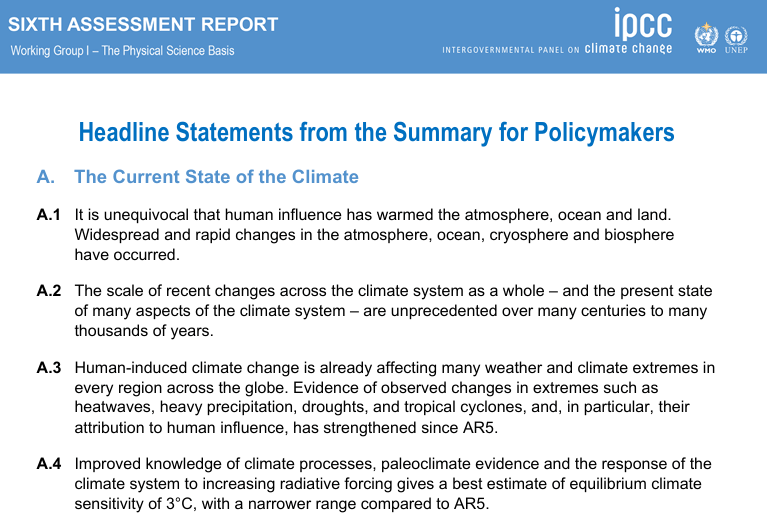
IPCC Conclusions: The Intergovernmental Panel on Climate Change (IPCC), representing the consensus of thousands of climate scientists reviewing all available research, state clearly: “It is unequivocal that human influence has warmed the atmosphere, ocean and land”. Specifically, the IPCC’s Sixth Assessment Report (2021) concludes that the rise in atmospheric concentrations of CO₂, methane, and nitrous oxide since 1750 is “unequivocally” due to human activities, and that human-induced greenhouse gas increases are the principal driver of the observed global warming. The IPCC notes that since formal scientific assessments began decades ago, human influence on climate went from a tentative theory to an established fact given the strength of evidence. In quantifiable terms, the IPCC assesses it is “extremely likely” (≥95% probability) that human greenhouse gases – with CO₂ being the largest contributor – have been the dominant cause of global warming since the mid-20th 4. These statements reflect a very high level of confidence among experts, built on extensive, peer-reviewed research.
National and International Science Bodies: Virtually every major scientific body in the world concurs with these findings. For example:
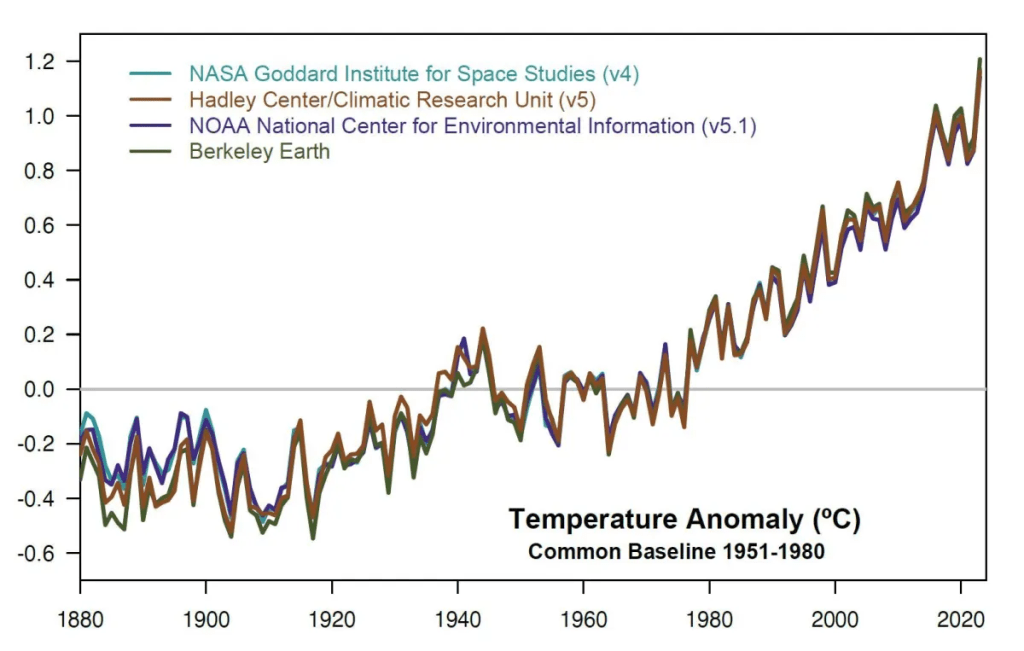
- The U.S. National Academy of Sciences affirms that “humans are changing Earth’s climate, primarily through greenhouse gas emissions.”
- The American Geophysical Union (AGU) declares that “multiple lines of evidence indicate human activities, especially GHG emissions, are the dominant cause of recent warming – no alternative explanation is supported by convincing evidence.”
- 18 leading scientific societies jointly stated that “rigorous research demonstrates that the greenhouse gases emitted by human activities are the primary driver of climate change.”
- Agencies like NASA and NOAA document the warming and attribute it chiefly to increased CO₂ from fossil 6fuels. NASA’s climate science site flatly states: “Human activity is the principal cause” of the rapid warming, based on multiple lines of evidence.
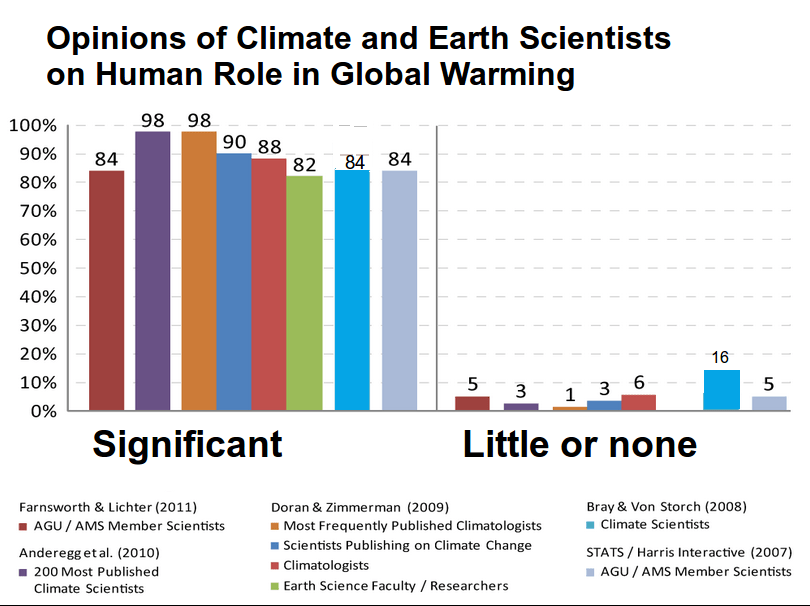
97% or more of experts agree that recent warming is largely human-caused
Peer-Reviewed Literature and Consensus Studies: The linkage between CO₂ and warming is one of the most intensively studied topics in climate science, and findings are remarkably consistent. Since the mid-20th century, numerous Detection and Attribution studies in the peer-reviewed literature have definitively detected the imprint of GHG increases (mainly CO₂) in observed climate records, with no viable alternative cause. This consensus is reflected in surveys of the literature: for instance, analyses of published climate science papers have found 97% or more of experts agree that recent warming is largely human-caused (and essentially 0% of credible research concludes otherwise). A 2021 review reported the consensus is now over 99% in recent literature. In sum, current scientific understanding – as documented by journals and assessments worldwide – is highly robust: CO₂-driven climate change is a reality accepted by the vast majority of experts, with strong evidence backing it.
Addressing Common Criticisms and Misconceptions
Despite the clear scientific consensus, some skeptics claim that CO₂ is not proven to cause climate change or that the warming is natural. Here we critically evaluate several common objections in light of the evidence:
- Claim: “There’s no proof CO₂ causes global warming – correlation doesn’t mean causation.”
Response: Causation in this case is demonstrated by multiple lines of evidence beyond just the CO₂-temperature correlation. The fundamental physics of CO₂’s greenhouse effect is proven: laboratory experiments show CO₂ absorbs infrared heat, and this is confirmed by real-world spectral measurements from satellites and ground stations. We have observed the planet warming as CO₂ increases, consistent with this mechanism. Crucially, scientists have directly measured the causal chain: a 10-year experiment detected increasing infrared heat reaching Earth’s surface specifically at the wavelengths CO₂ absorbs, directly due to rising CO₂ levels. This is clear experimental evidence of cause-and-effect – essentially capturing CO₂ in the act of warming the climate. Additionally, the distinct fingerprint of CO₂ (warming low atmosphere, cooling upper atmosphere) has been observed, as noted above, which cannot be explained by anything else. All these independent confirmations (theoretical, observational, and model-based) converge on the same conclusion: increasing CO₂ causes warming of the Earth system. There is no serious scientific uncertainty about this causal relationship. The claim that “no proof” exists ignores over a century of research and the direct observations that affirm the predictions of CO₂-driven warming. - Claim: “Climate change is natural; the climate has changed in the past without CO₂ from humans.”
Response: Earth’s climate does undergo natural fluctuations, but that doesn’t mean current changes are natural. In fact, natural drivers cannot account for the current rapid warming. For example, the Sun’s output has shown no net increase (if anything, a slight decrease) in the past few decades, while global temperatures skyrocketed – ruling out the Sun as the cause. Large volcanic eruptions, another natural influence, have occurred but tend to cool the climate briefly (and cannot explain a long-term warming trend). Internal cycles (like El Niño) only temporarily redistribute heat and lead to short-term ups and downs, not the sustained warming observed. Meanwhile, the fingerprint evidence (tropospheric warming with stratospheric cooling) directly contradicts the “natural warming” hypothesis and strongly implicates GHGs. As one comprehensive study concluded, it is “virtually impossible” for the observed atmospheric warming pattern to be explained by natural variability or solar changes – the pattern is uniquely tied to human CO₂ emissions. While it’s true that climate changed before humans (ice ages, etc.), those past changes often had known causes (like orbital cycles) and slower rates. None of those natural factors can explain the unprecedented rate and magnitude of warming we see today. In fact, when scientists consider all known natural influences together, the expected change in global temperature over the 20th–21st century would have been slight cooling – yet we observed significant warming. The only way to reproduce the observed warming trend is by including the rise in greenhouse gases, especially CO₂. Thus, the argument that “climate change is just natural” is refuted by multiple lines of observational evidence. The global scientific community, including experts at NASA, NOAA, and the IPCC, have stated unequivocally that the current climate change is human-caused and not a natural fluctuation. - Claim: “CO₂ can’t be the main cause because CO₂ changes historically lag behind temperature changes (e.g. in ice ages).”
Response: It’s true that in the ice age cycles, Antarctic ice core records show CO₂ sometimes rose after initial warming began. However, this does not mean CO₂ wasn’t a driver of further warming – in fact, it was a feedback that greatly amplified those past warming events. Here’s what happened in an ice age deglaciation: a small warming initiated by orbital shifts caused the oceans to release CO₂ (warm water holds less gas), then that extra CO₂ in the atmosphere drove much more warming, helping to fully exit the ice age. In those cases, CO₂ was both an effect and a cause: it didn’t start the warming, but it took the reins and intensified the climate change. Paleoclimate experts have confirmed that without the CO₂ feedback, the glacial-interglacial temperature changes would have been much smaller. Now, in today’s situation, we are artificially raising CO₂ ahead of any temperature change, essentially jumping straight to the amplifying part. The result – warming – is expected and is indeed occurring. The lag in ancient climates shows that CO₂ was powerful enough to drive warming when it increased, regardless of why it increased. So past lags don’t disprove CO₂’s influence; they actually reveal it. Moreover, current CO₂ levels are far above natural ranges, indicating today’s warming is driven by this excess CO₂ rather than some natural cycle. In summary, the ice-age lag argument is a misunderstanding – the paleoclimate record supports, not contradicts, the strong warming effect of CO₂. - Claim: “CO₂ is only a trace gas – how can such a small fraction of the air cause significant warming? And isn’t water vapor a more important greenhouse gas?”
Response: Trace gases can have big effects. For instance, ozone is only a few parts per million in the stratosphere but protects us from harmful UV radiation. Similarly, CO₂’s impact comes from its heat-trapping properties, not its bulk volume. Even at ~0.04% of the atmosphere, CO₂ is extremely effective at absorbing infrared energy that Earth would otherwise lose to space. Adding a little more CO₂ is like adding an extra blanket – it retains more heat. Water vapor is indeed the most abundant greenhouse gas and contributes the largest share of the natural greenhouse effect. However, water vapor differs from CO₂ in one critical way: the amount of water vapor in the air depends on temperature. The atmosphere can only hold so much humidity before it condenses to rain. So water vapor acts as a fast feedback, not an independent forcing; it amplifies warming but doesn’t initiate it. If you increase CO₂ and warm the air, the air can hold more water vapor, which leads to further warming (a positive feedback). But if you directly inject extra water vapor, it rains out in days to weeks; it won’t accumulate to drive long-term climate change. By contrast, CO₂ emitted today remains in the atmosphere for decades to centuries, steadily building up. In essence, CO₂ is the “control knob” that sets the baseline temperature, and water vapor magnifies changes as a feedback. That’s why climate scientists focus on CO₂: it is the principal lever humans are pushing. As the MIT Climate Portal explains, water vapor is “not in the driver’s seat. CO₂ is still the main culprit” for ongoing warming, with water vapor acting to amplify the CO₂-induced warming. In short, the relative abundance of CO₂ vs. water vapor doesn’t diminish CO₂’s importance – CO₂ is the trigger for additional warming, and its increase has indeed set off a cascade of feedbacks (including water vapor rise) that drive the climate change we observe. - Claim: “Scientists disagree about this, or it’s not settled.”
Response: This is a misconception. There is an exceptionally strong scientific consensus on CO₂-driven climate change. Every national academy of science and virtually every professional scientific society in relevant fields has issued statements affirming that anthropogenic GHGs are causing global warming. Studies of the literature have quantified the agreement: 97–99% of publishing climate scientists conclude that human-emitted GHGs (especially CO₂) are causing global climate change. Dissenting views (the <3%) are typically not supported by robust data or have been debunked by further research. The few oft-cited skeptic scientists have not provided an alternative theory that withstands scrutiny or explains the observed evidence better than the CO₂ theory. Moreover, the fundamentals don’t rely on consensus; they rely on evidence. And as described, the evidence for the CO₂–climate link is overwhelming. It spans laboratory spectroscopy, atmospheric observations, physical theory, models, and Earth’s history. The convergence of all these lines of inquiry has convinced the scientific community that this issue is settled: increased CO₂ = warming climate. While healthy scientific debate continues on details like the exact magnitude of future warming or regional effects, the core link between CO₂ and global warming is no longer in serious question. Dismissing it as “unproven” or “controversial” misrepresents the state of knowledge – it’s as well-established as any major scientific finding can be.

In conclusion, the link between CO₂ and climate change is supported by a robust chain of evidence and affirmed by expert consensus.
The current warming of our planet correlates with, and is unequivocally caused by, the sharp rise in CO₂ from human activities.
Authoritative reports (IPCC, NASA, NOAA, etc.) reinforce that we are observing the expected consequences of elevating CO₂: a warmer atmosphere and ocean, melting ice, rising seas, and more extreme heat events – changes only explainable by the greenhouse effect intensification. Far from being a speculative or unproven theory, the CO₂–driven warming is a directly observed reality and an “established fact” in the scientific community.
Continued research only strengthens this understanding. As one definitive assessment put it:
“The evidence for human-induced climate change is clear and compelling – we are fundamentally changing the Earth’s atmosphere by adding CO₂, and the climate is responding accordingly.”
https://science.nasa.gov/climate-change/evidence
Bite sized evidence
If you really want research that conclusively connects global warming to emissions, here you go. That research has existed for decades, and it’s not hidden; it’s the foundation of modern climate science.
Start with NASA’s own summary of the evidence, which cites the underlying peer‑reviewed studies:
https://science.nasa.gov/climate-change/evidence/
Caltech’s climate science exchange also lays out the data clearly, including the fact that 97%+ of actively publishing climate scientists agree that human CO₂ emissions are the primary driver of recent warming:
https://scienceexchange.caltech.edu/topics/sustainability/evidence-climate-change
And if you want the broadest possible review, The reports from the world’s leading scientific body on climate, the IPCC, synthesise thousands of peer‑reviewed papers. They state that human‑caused greenhouse gas emissions, primarily CO₂, are responsible for all of the observed warming since 1850–1900. and conclude that human‑caused warming is “unequivocal” — a word they don’t use lightly. ,
Source (IPCC AR6, Summary for Policymakers):
https://www.ipcc.ch/report/ar6/wg1/downloads/report/IPCC_AR6_WGI_SPM.pdf
A summary of the scientific consensus is here:
https://en.wikipedia.org/wiki/Scientific_consensus_on_climate_change
There is also this great and easily understood article on satellite observations which clearly show the impact that CO2 has on the climate. https://thelogicofscience.com/2025/12/30/climate-change-is-undeniable-evidence-from-satellites/
The research exists, it’s extensive, and it’s publicly available; the links above are the best place to start.
 Sustainable Ferriby