
No-Regret Actions for UK Homeowners to Reduce Carbon Footprint and Save Money
In today’s world, reducing our carbon footprint is more important than ever. With climate change impacting our planet, it’s crucial that we all take steps to minimise our environmental impact.
On the other hand…
Making major lifestyle changes and substantial sustainable technology investments is all well and good, but it takes money, time, commitment and a fair bit of knowledge. What if I just want to do something small and inexpensive and immediate?
The good news is that there are many simple and practical actions you can take to make a difference. This article suggests some things pretty much anyone can do to lower their carbon footprint. Most of them end up costing nothing or even saving you money.

Note: CO₂ reductions and costs are estimates based on typical household energy usage and national averages. Your savings will depend on your personal habits and home characteristics.
General principles for reducing your greenhouse gas footprint
1. Understand your CO2 emissions
The simplest starting point is to be aware of where your major sources of CO2 are. This diagram is a useful guide. Nationally, heating is the biggest source of CO2 with most of this coming from gas combi-boilers, with transport a close second. Electricity is down in 4th place due to both the increasing amount of non-carbon generation and the relatively low number of kilowatt hours of electricity used compared to gas.

2. Embrace energy efficiency
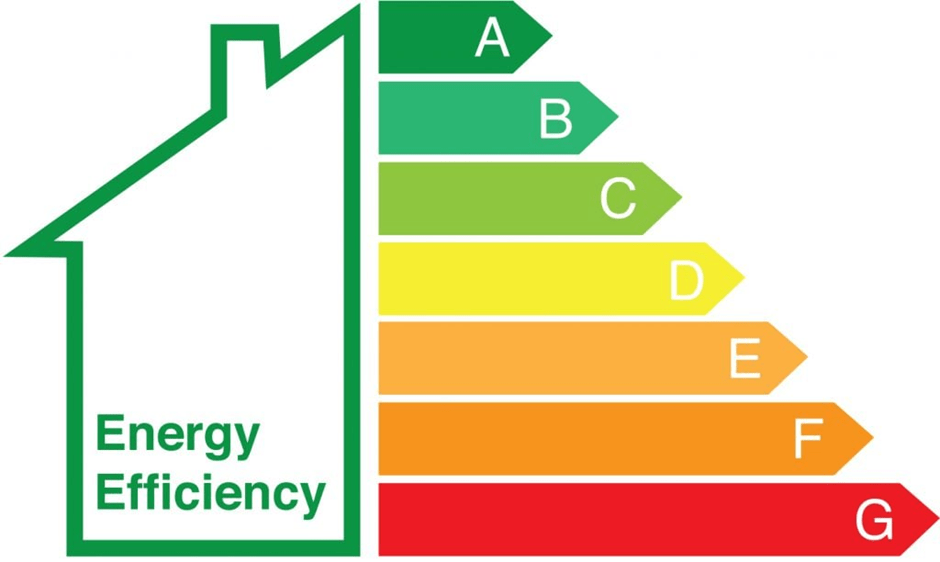
One of the easiest ways to reduce your carbon footprint is by making your home more energy efficient. Look at the energy-efficient label when buying appliances and choose the A+ ratings, for example. Sort out your lighting. Turn things off when you don’t need them on and ensure that your home is well-insulated to reduce heating and cooling costs.
3. Reduce, Reuse, Recycle
The three R’s – Reduce, Reuse, and Recycle – are fundamental principles of sustainability. Reduce your consumption by buying only what you need and opting for products with minimal packaging. Reuse items whenever possible, whether it’s re-purposing old jars for storage or donating clothes you no longer wear. Finally, make recycling a habit by separating your waste and ensuring that recyclable materials are properly disposed of.
4. Choose sustainable transportation
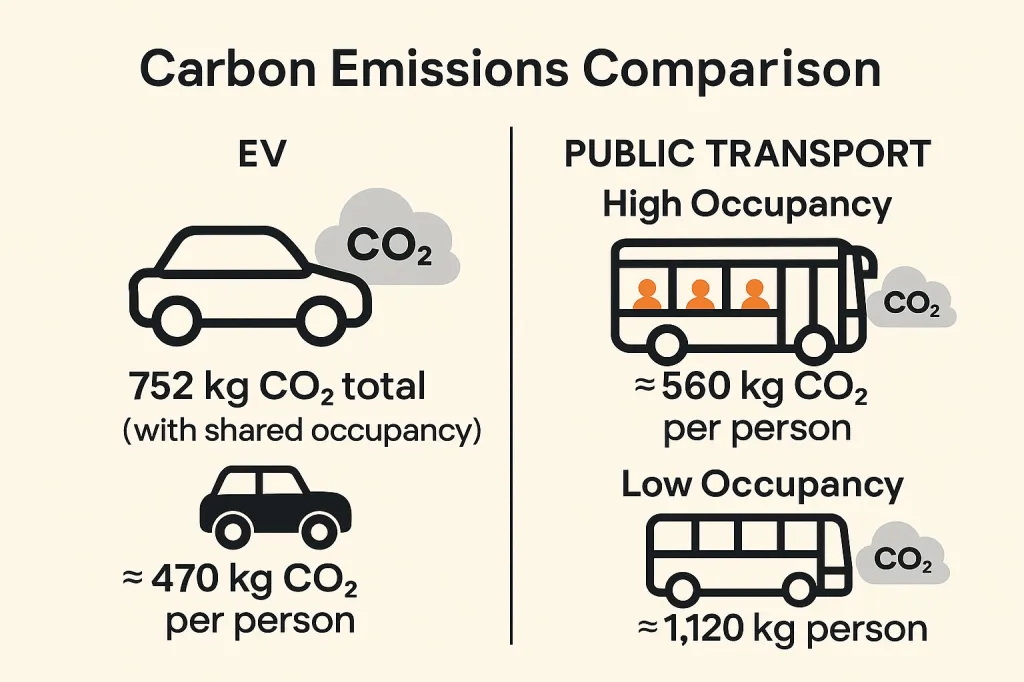
Transportation is a significant contributor to carbon emissions. Whenever possible, choose sustainable modes of transport such as walking, cycling, or using public transportation (unless you drive an EV). If you need to drive, consider carpooling. These small changes can significantly reduce your carbon footprint and contribute to cleaner air.
5. Support renewable energy
Switching to renewable energy sources is a powerful way to reduce your carbon footprint. At the very least subscribe to a green energy tariff from your utility provider. If you have the option, consider installing solar panels on your home, it can be cheaper than you think. Supporting renewable energy not only reduces your reliance on fossil fuels but also promotes the growth of sustainable energy industries.

6. Adopt a plant-based diet
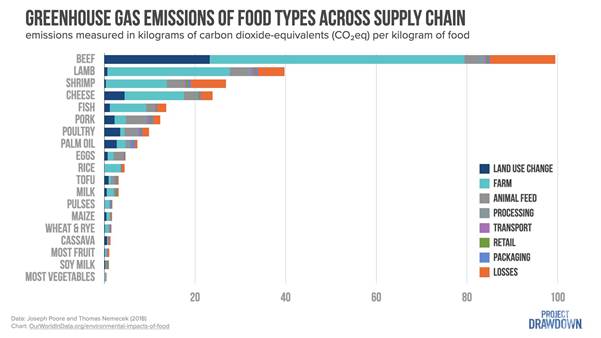
The food we eat has a significant impact on the environment. By incorporating more plant-based meals into your diet, you can reduce your carbon footprint and promote better health. Try experimenting with meatless Mondays or exploring new vegetarian and vegan recipes. No one says you have to become a vegetarian or vegan but cutting down on the amount of meat you eat, especially beef, is good for you and the planet. Every small change in your diet can make a big difference.
7. Educate and advocate
Finally, one of the most impactful things you can do is to educate yourself and others about the importance of sustainability. Share your knowledge with friends and family, and advocate for policies and practices that promote environmental protection. By raising awareness and encouraging others to take action, you can amplify your impact and contribute to a more sustainable future.
Remember, every small step counts. By incorporating these practical tips into your daily life, you can make a positive difference for the planet. Let’s work together to create a more sustainable and environmentally-friendly world.
Practical actions you can start doing today.
1. Make sure you are only using efficient LED lighting
If you haven’t already done so, start by switching to LED light bulbs. They use about 80% less energy than traditional incandescent bulbs. Additionally, the CO₂ savings are significant; modern lighting can reduce emissions by roughly 150–200 kg CO₂ per year. Nationwide, phasing out inefficient bulbs is estimated to avoid about 1.26 million tonnes of CO₂ annually.
Cost Impact: While a quality LED bulb runs about £2–£5, its longer lifespan means that—even considering the upfront cost—the average household saves roughly £40 per year on energy bills (and fewer bulb replacements) over time.
Action: Really, you should just do it now. Your supermarket, DIY store and lots of other places sell bulbs. Just check which fitting you need, the UK has rather a mixture of bayonet fittings and normal and small screw fittings, plus 2 types of downlighters (‘halogen’) bulbs.
2. Unplug devices to avoid phantom energy draw
CO₂ Savings: Many modern electronics continue to draw power in standby mode. By unplugging or using smart plugs and home automation to turn devices off automatically, an average UK home could cut roughly 45 kg CO₂ per year that would otherwise be wasted.
Cost Impact: Preventing “phantom loads” can quickly save around £50–£55 per year on your electricity bill.
Note: Even though each device’s standby draw is small, the cumulative effect across multiple appliances makes this an easy win. Although energy efficiency standards have driven the amount down to just a few watts it still adds up. It costs about £2.25 per watt per year, so that 5 watts standby on your TV, computer monitor or whatever is costing you £10 each year; you probably have quite a lot of such devices.
Action: It’s easy. Turn things off when you don’t need them. Instead of leaving the garden light on all night, use a timer to just the hours you really need. Even better, use Alexa/Google Home and some smart devices to automate what’s on and what’s off at different times of day.
3. Lower your thermostat by 1°C
CO₂ Savings: Research suggests that dropping the thermostat by 1°C can save about 125 kg CO₂ per household each year. Nationally, if every home lowered their heating by just 1°C, it could save 3.5 million tonnes CO₂ .
Cost Impact: This small adjustment may reduce your heating costs by approximately £60 per year—a win for your wallet and the planet. Conversely increasing the temperature of your home by 1°C could increase your heating bills for 5%-10%.
Action: Don’t heat you house above 20°C unless you have to. Only heat the rooms to the temperatures you need; don’t heat your home much when you are away.
4. Switch to cold water for laundry
- CO₂ Savings: Heating water for washing clothes is energy intensive. Using cold water cycles for most loads can avoid roughly 100 kg CO₂ per year (this varies with your number of loads and machine efficiency) .
- Cost Impact: On average, you might cut £15–£20 per year off your energy bills since much less energy is needed to heat water.
- Action: You are probably doing this already, to be honest. All modern, energy efficient washing machines and dishwashers are cold fill devices that only heat as much as they need whilst using longer, lower energy cycles to reduce energy demands. If your devices aren’t then it’s probably time to think about replacements. The other thing you can do is do the washing outside of the peak demand periods (breakfast and tea time) as that’s when the electricity grid is at its most carbon intense.

5. Air dry clothes instead of using a tumble dryer
CO₂ Savings: Tumble dryers are energy hogs. Replacing dryer cycles by air drying can reduce emissions by around 70–80 kg CO₂ per year (by avoiding roughly 200–260 kWh of electricity consumption).
Cost Impact: This switch can save you approximately £50 a year in energy costs, in addition to prolonging your clothes’ life.
Action: If you have a garden, set up your washing line and enjoy the fresh smell of clothes; do a quick final tumble to remove creases if needed.
6. Optimise your cooking habits
CO₂ Savings: Simple techniques—such as using lids on pots, utilising residual heat, or opting for the microwave instead of the oven for reheating—can save an estimated 50–100 kg CO₂ per year depending on your cooking frequency.
Cost Impact: Such efficiency improvements may trim your kitchen energy bills by around £10–£20 annually.
Action: Always use lids on saucepans. Use an air fryer instead of the oven to cook or reheat small meals. Even minor shifts, like not preheating the oven if unnecessary, add up over time.
7. Minimise water wastage
CO₂ Savings: Reducing water use (and the energy needed to heat it) can save another 30–50 kg CO₂ per year, particularly if you upgrade fixtures like showerheads.
Cost Impact: This practice could lower your water/heating bills by roughly £10–£15 a year.
Action: Fix leaks and dripping taps. Install Low-Flow fixtures
8. Plan meals to reduce food waste
CO₂ Savings: Better planning and smarter grocery shopping can cut out needless food waste; the decomposing food in landfill produces methane. It’s possible to save an estimated 50–100 kg CO₂ per year per household.
Cost Impact: Fewer wasted meals mean saving on grocery bills—possibly £20–£30 annually—while also lessening the overall environmental burden from food production to waste.
Action: Only buy and cook what you need. If possible, cook enough for 2 days at a time. Don’t let your food go off. Also look at the CO2 from food chart earlier and consider eating more of the foods that cause less emissions.
9. Reduce single-use items in favour of reusables
CO₂ Savings: Opting for reusable products (e.g., water bottles, coffee cups) avoids the emissions involved in manufacturing and disposing of single-use items. This change can save around 20–50 kg CO₂ per year per household.
Cost Impact: In practice, consistently reusing items can add up to a saving of £10–£20 per year when you factor in the cost of frequently replacing disposables.
Action: Whenever possible, avoid plastic wrappings, disposable bottles etc. Get reusable lids for tins, bowls etc
Summary of household actions
These simple, inexpensive actions combined could reduce a typical UK household’s emission by approximately 1.5 tonnes of CO₂ per year. That’s over 15% for minimal cost and effort.
You don’t have to do them all. You need to choose what works for you. Don’t feel bad if you can’t do everything straight away; you get to decide what and when as part of your sustainability journey.
The longer journey – high-impact actions for bigger emission reductions
Once you have done what you can about these “low-hanging fruit” actions, you might also consider additional high impact actions. These take more money and sometimes more effort, but they can both hugely lower your cost of living and avoids tonnes of CO2.
Switch to Renewable Energy Sources:
Transitioning to a green energy tariff or installing solar panels can cut household emissions by several tonnes annually, depending on your energy consumption.
Cost Impact: Installing solar panels typically costs between £4,000–£6,000 upfront but can save £300–£500 per year on energy bills. Green energy tariffs may cost slightly more than standard tariffs but offer significant environmental benefits. See our article on grants and loans.
CO₂ Savings: Solar panels can reduce emissions by 1–3 tonnes CO₂ per year, depending on system size and energy usage.
Upgrade to Energy-Efficient Appliances
Replacing old appliances with energy-efficient models (e.g., refrigerators, boilers) can significantly reduce energy use and emissions.
Cost Impact: Energy-efficient appliances may cost £200–£1,000 more upfront but can save £50–£150 per year on energy bills.
CO₂ Savings: Upgrading appliances can cut emissions by 0.5–1 tonne CO₂ per year, depending on the appliance and usage.
Improve Home Insulation
Proper insulation in walls, roofs, and floors can drastically cut heating and cooling needs, saving both energy and emissions.
Cost Impact: Insulation upgrades typically cost £500–£2,000 but can save £200–£400 per year on heating bills.
CO₂ Savings: Insulation can reduce emissions by 1–2 tonnes CO₂ per year, depending on the extent of the upgrades.
Adopt Electric Vehicles
Switching from a petrol or diesel car to an EV can reduce transport-related emissions by up to 50% or more, depending on your driving habits.
Cost Impact: EVs typically cost £20,000–£40,000 upfront but offer lower running costs—saving £500–£1,000 per year on fuel and maintenance.
CO₂ Savings: EVs can reduce emissions by 2–4 tonnes CO₂ per year, depending on mileage and energy source.
Shift to a Plant-Based Diet
Reducing meat and dairy consumption in favour of plant-based foods can lower food-related emissions by up to 70% for some households.
Cost Impact: Plant-based diets can be cost-neutral or even save money, depending on food choices.
CO₂ Savings: Shifting to a plant-based diet can reduce emissions by 1–2 tonnes CO₂ per year, depending on dietary changes.
These actions often require a higher upfront investment but deliver substantial long-term benefits for both the environment and your household budget.
Sources and further reading
How Does Unplugging Appliances Help the Environment? – Enviroliteracy
Energy efficiency and the carbon footprint of household appliances – InfoCons
Is your cooking burning money and energy? – BBC Food
Data point – What difference can one degree make? – The Economist Impact
End of halogen light bulbs spells brighter and cleaner future – GOV.UK
How Does Switching to LED Light Bulbs Reduce Your Carbon Footprint? – SimplyLED
Energy Saving Bulletin – Air-drying clothes – Wrexham Council
Make a sustainable choice by washing with cold water – Hoover Home Blog
Wash clothes in full loads and at a cooler temperature – Natural History Museum
How cutting your food waste can help the climate – BBC Future –
 Sustainable Ferriby