Lies, damn lies and entrenched interests.
Introduction
There are many myths, misconceptions, out of date information and outright lies around the move to sustainable societies and NetZero that we come across every day, especially when it comes to electric vehicles.
You will have heard many of them; you may even have been persuaded that some are true. Most are not, or are a gross oversimplification, distortion or suffer from serious flaws of reasoning. The following attempts to provide perspective.

Are EVs really as heavy as some people claim?
Claim: EVs (Electric Vehicles) are heavier than ICEs (Internal Combustion Engine vehicles) and produce more tyre and brake particulates as well as damage roads, car parks etc.
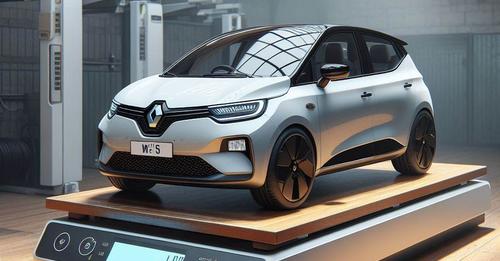
Here’s some data on a variety of cars, by weight.
| Car Model | Fuel Type | Kerb Weight (kg)* inc 70kg passenger |
|---|---|---|
| Dacia Spring | Electric | 970 |
| Ford Puma 1.0l | Petrol | 1280 |
| Renault 5 | Electric | 1350 |
| Volvo V40 TD2 | Diesel | 1561 |
| Tesla Model 3 Standard Range Plus | Electric | 1655 |
| Volvo V40 T3 | Petrol | 1655 |
| Ford Mondeo 2.0l | Petrol | 1664 |
| MG ZS EV Standard Range | Electric | 1685 |
| MG ZS EV Long Range | Electric | 1692 |
| BMW 3 Series (320i) | Petrol | 1660 |
| Ford S-Max 2.0l | Diesel | 1734 |
| Kia Nero | Petrol | 1739 |
| BMW 3 Series (320d) | Diesel | 1740 |
| BMW 520i | Petrol | 1800 |
| Kia e-Nero | Electric | 1812 |
| Ioniq 5 | Electric | 1830 |
| Audi Q5 | Petrol | 1890 |
| Tesla Model 3 Long Range | Electric | 1928 |
| BMW 330e | Hybrid | 1970 |
| Polestar 2 | Electric | 1996 |
| BMW i5 eDrive40 | Electric | 2205 |
| BMW X5 40d | Diesel Hybrid | 2385 |
| Audi e-tron | Electric | 2445 |
| Range Rover | Petrol | 2495 |
| Ford Transit Panel Van (laden) | Diesel | 3400 |
| Single decker bus, 50% full | Diesel | 19,000 |
| Heavy Goods Vehicle (articulated lorry) | Diesel | up to 44,000 |
The first thing to notice is that the EVs are not obviously heavier. Claims of them being 300-400kg more than petrol cars aren’t apparent. Absolutely, there are some heavy (over 2 tonne) EVs; these are mid-sized or large SUVs, but the petrol equivalents are also over 2 tonnes.
The second thing of interest is that cars that were designed to only be EVs tend to be much lighter than those which were intended to be petrol/diesel and then ‘modified’ to also be EVs. This is especially true of German manufacturers it seems.
Thirdly, until recently the vast majority of EVs were larger, high priced, high-end cars (the effect of market forces). A lot of claims of EVs being heavy were because journalists etc. took the average weight across all common ICEs and compared them with all EVs. Since ICEs include all the lightweight compact family cars and city run-arounds, which are under-represented in EVs, the averages are skewed to suggest EVs are much heavier than they are.
A compounding issue is that bigger EVs, in common with traditional cars, tend to have poor aerodynamics, requiring even bigger batteries to maintain acceptable range. As a comparison, the Tesla Model 3 standard range (263 mile range) has a 55.4 kWh battery weighing 478 kg. The new, massive Polestar 3 has to have a 111 kWh battery to achieve 392 miles. It goes 50% further, but needs double the battery to do it. It’s a law of diminishing returns.
Comparing like-with-like, most EVs are not really more than the weight of a teenager more than their ICE equivalent. Typically 5-8% more for equivalent vehicles. As technology improves they are getting lighter; such as the Dacia Spring which will be just 970kg.
Finally, let’s look at a list of the heaviest cars available in the UK today. I’ve highlighted all the EVs.
- Mercedes EQS SUV – 2,810kg
- Mercedes-Maybach GLS – 2,785kg
- Range Rover PHEV LWB – 2,770kg
- Rolls-Royce Phantom – 2,745kg
- Volvo EX90 Performance Ultra – 2,743kg
- BMW XM Red label – 2,710kg
- Mercedes-AMG EQS 53 – 2,700kg
- Rolls-Royce Cullinan Black Badge – 2,660kg
- Audi SQ8 e-tron Sportback – 2,650kg
- BMW X7 xDrive M60i – 2,600kg
- Mercedes G 63 – 2,560kg
- Bentley Flying Spur LWB – 2,525kg
Because they are so heavy they wear out their tyres much faster than an ICE and go through brakes much quicker.
Brake pad wear is much lower on EVs since slowing down is mostly done use using regenerative braking instead of using hte brakes. Test have shown particulate emissions from EV brake pad wear is reduced by anywhere from 25% to 95%.
EVs also are designed to use specific, efficient and heard wearing tyres. These do not wear out faster than on any other car.
Overall particulate emission, including tyres, is lower than from ICEs
Conclusion
Some EVs are heavy, especially the bigger ones. This is equally true of petrol and diesel cars.
Dedicated EVs tend to be only a little heavier than their equivalent ICEs, just 20kg or so.
If the concern is that heavy cars are dangerous and damaging then the focus needs to be on the marketing of SUVs or all types since these are far heavier than most EVs.
Regardless of their weight, EVs produce far fewer particulate emissions from brakes and no more tyre wear than traditional vehicles.
Sources
EV Database: https://ev-database.org/uk/
BMW: https://www.bmw.co.uk/en/all-models/
Ultimate specs: https://www.ultimatespecs.com/car-specs/
Some more reading
The fine folk at FairCharge have just published this useful ebook:
If you come along to the Sustainable Homes & You event you might be lucky enough to walk away with a hardcopy.
 Sustainable Ferriby